
Gujarat Deputy Chief Minister Harsh Sanghavi has outlined Ahmedabad's vision for the 2030 Commonwealth Games, emphasising unparalleled accessibility for para athletes and a strong commitment to sustainability through green energy and electric transport.

VinFast has gone from an unknown brand to India's fifth-largest EV carmaker in just seven months, but its toughest battle is only beginning.

Researchers at IIT Guwahati have developed energy-efficient bricks designed to keep buildings naturally cool, offering a promising solution for sustainable construction. These bricks incorporate Phase Change Materials (PCMs) to absorb and release heat, reducing the need for air conditioning and lowering energy consumption.

A new study by The Energy & Climate Initiative Society (ENCIS) predicts that AI adoption in India's power generation sector will surge from 35% to 65% by 2030, becoming a core operational capability. The study highlights that nearly seven out of ten professionals see power generation as offering the best opportunity for efficiency gains through AI, driven by India's expanding digital infrastructure and significant investments from energy giants. Predictive asset management and proactive maintenance are identified as key areas for AI application, with efficiency being the primary driver for AI investments.
Sustainable Energy Bond programmes is an approach that comes with a business model that satisfies all stakeholders on the good old fashioned single bottom line of money - while also offering social and environmental benefits, writes Rajni Bakshi.

The University of Sheffield has announced a major milestone in the push for greener aviation as it produces its first report from testing a new sustainable aviation fuel (SAF). The research is helping support the faster rollout of low-carbon jet fuels.
Researchers at IIT Indore have developed a groundbreaking method to convert carbon dioxide and glycerol, two common waste materials, into valuable green chemicals like lactic acid and formic acid in just seven minutes. This low-energy process uses a specially designed ruthenium-based catalyst and microwave heating, offering a sustainable solution for waste management and green manufacturing.
Researchers at MIT World Peace University in Pune have developed an innovative thermal energy storage system using a phase change material (PCM)-based battery. This technology addresses the intermittent nature of solar energy by storing excess heat for use after sunset, potentially reducing reliance on conventional fuels for water heating and enhancing energy security.

Researchers at the Central University of Jharkhand have developed an eco-friendly solar cell using dye extracted from the Mirabilis jalapa flower, demonstrating the potential of natural, non-toxic materials for solar energy applications.
N Kalaiselvi, the first woman Director General of the Council of Scientific and Industrial Research (CSIR), has received an extension to her tenure until February 2027. Known for her pioneering work in lithium-ion batteries, Kalaiselvi's extended leadership marks a significant milestone for women in Indian science.
NTPC Green Energy Limited (NGEL) and Nxtra Data have signed an agreement to explore renewable energy project opportunities for Nxtra's data centres across India.

CSIR Director General N Kalaiselvi emphasised the importance of research and applied sciences in developing sustainable solutions for India's energy security and environmental challenges at an international conference on Sustainability Through Fundamental and Applied Sciences (STFAS), 2026.
A top government official says that while India has made significant progress in renewable energy, technical issues are hindering large-scale implementation. The government is working on solutions such as grid flexibilisation and battery storage.

Researchers at the University of Sheffield have developed a novel method for producing sustainable aviation fuel (SAF) using concentrated solar energy and captured CO2, potentially reducing reliance on used cooking oil.
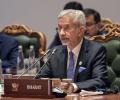
India has expressed serious concerns about the West Asia crisis and its potential impact on energy supplies and maritime stability, urging BRICS nations to find practical solutions to geopolitical challenges and unilateral sanctions.

IIT-Guwahati has partnered with Kaashyap Cleantech Innovations to commercialise bio-methanol production technology, which converts greenhouse gases into a versatile liquid fuel, offering environmental and performance benefits.

The Reserve Bank of India (RBI) has maintained its benchmark policy rate at 5.25 per cent for the fourth consecutive meeting, prioritising clarity on inflation trends, particularly concerning energy costs and geopolitical developments.

Larsen & Toubro (L&T) reported a 14 per cent year-on-year increase in Q1 FY27 profit attributable to owners, reaching Rs 3,926 crore, surpassing analyst estimates, despite facing significant supply-chain disruptions in West Asia.

Jobs in the clean-energy sector are projected to reach 905,000, while energy efficiency-related jobs are expected to surge to 428,700 by 2029-2030.

Despite aggressive expansion, India's solar power sector faces significant hurdles from rising regional disparities in installed capacity and a looming manufacturing glut due to overcapacity in domestic solar equipment production, potentially leading to consolidation and pricing pressures.

A new study by IIT Kharagpur researchers, published in Nature Communications, reveals that urban growth patterns significantly influence future cooling demand in cities. The research highlights that a city's "thermal memory," shaped by decades of development decisions, impacts its heat burden and energy requirements, independent of global temperature rises. The study analysed 88 Indian cities and a global sample of 52 cities over two decades.

'I am getting better. Thank you for checking in.'

Indian Oil Corporation Ltd (IOCL) plans to invest approximately Rs 1 trillion in petrochemical projects over the next five to six years, aiming to significantly increase its petrochemical intensity and production capacity to meet growing domestic demand.
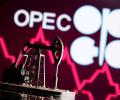
The United Arab Emirates has announced its decision to withdraw from OPEC and the wider OPEC+ alliance, effective May 1, 2026, signalling a significant policy-driven evolution in its long-term energy strategy aimed at aligning with domestic economic goals and increased production investment.

LIC is the only brand in the Brand Finance India 100 2026 report that has a top five rank in both brand value and brand strength.
The United Arab Emirates has announced its decision to withdraw from OPEC and the wider OPEC+ alliance, effective May 1, 2026, signalling a significant policy-driven evolution in its long-term energy strategy aimed at aligning with domestic economic goals and increased production investment.

Sports Minister Mansukh Mandaviya led the FIT India Cyclothon in Mumbai, advocating for cycling as a sustainable mode of transportation. The event, attended by Narsingh Yadav and Jackie Shroff, highlighted the importance of cycling for personal health, environmental sustainability, and energy conservation, especially amidst global fuel supply concerns.

A parliamentary panel has strongly recommended that the Indian government appoint a dedicated 'polar ambassador' to enhance its strategic engagement and diplomatic influence in the critical Arctic and Antarctic regions, aligning with global trends and India's growing focus on polar affairs.

The Indian government has dismissed concerns that the use of E20 fuel could affect the validity of vehicle insurance policies, stating that the ethanol blending programme remains safe, consumer-friendly, and economically beneficial.

'We can integrate AI and tech into education, but that is just a means and not an end.' 'Ultimately, we need to control what happens in a classroom and we need to let teachers innovate their teaching style to suit the needs of Gen Z and beyond.'

More than a dozen companies, including quick commerce firm Zepto, logistics platform Shiprocket, and housing finance company Truhome Finance, are preparing to launch their initial public offerings (IPOs) next month, collectively aiming to raise over Rs 25,000 crore.

Indian benchmark indices, Sensex and Nifty, recorded their fifth consecutive day of losses, driven by investor caution over rising oil prices due to West Asia tensions and renewed concerns regarding US trade tariffs.

Several Indian real estate companies, including BPTP Ltd and Smartworld Developers, are rethinking or shelving their initial public offering (IPO) plans, which were expected to raise around 15,000 crore, due to weaker housing demand, higher costs, and a more cautious investment climate.

A new study reveals that green hydrogen's potential as a sustainable fuel is contingent on the rapid decarbonisation of energy grids worldwide.

A new study reveals that India's annual gross primary productivity (GPP) increased significantly from 1985 to 2014 and is projected to continue rising until 2100, even under high-emissions scenarios. This enhancement is attributed to stronger precipitation and carbon dioxide fertilisation effects, with the Indo-Gangetic Plain, Northeastern India, and the Western Ghats expected to see the largest increases.

For India, the guiding principle should remain clear: Engage Bangladesh as a sovereign nation and society rather than through the prism of any individual leader or political party, suggests Manoj Mohanka.

Top commanders of the Indian Navy will discuss the implications of the West Asia crisis on India's energy security and review operational readiness at a three-day conference.

Despite international crude oil prices falling to a four-month low, retail petrol and diesel prices in India are unlikely to be cut immediately because state-run refiners are still processing costlier crude purchased during the peak of the West Asia crisis, Oil Minister Hardeep Singh Puri said.

FPIs have already withdrawn Rs 2.6 trillion from Indian equities in 2026, exceeding the outflows recorded in any previous full calendar year.

The harsh truth is that the US is no longer a reliable partner, cautions Ramesh Menon.
